
Soy Wax vs Paraffin Wax Health: What Science Says
Table of Contents
- Soy Wax vs Paraffin Wax: What Actually Changes Your Indoor Air
- Are Paraffin Candles Toxic? Separating Chemistry From Marketing
- The Role of the Wick: The Variable Most Comparisons Ignore
- Phthalate-Free Candle Fragrances and Why They Matter More Than Wax
- Benefits of Soy Wax Candles Beyond the Health Conversation
- Allergy and Sensitivity Profiles: Who Reacts and Why
- How to Read a Candle Label Before You Buy
- Conclusion: Choosing a Candle You Can Actually Breathe Around
- Frequently Asked Questions
Last Updated: September 27, 2026
Soy Wax vs Paraffin Wax: What Actually Changes Your Indoor Air
The soy wax vs paraffin wax health question comes down to one uncomfortable truth: the wax base matters far less than the wick and the fragrance oil burning alongside it. At My Madd Kreations, we pour every candle with that hierarchy in mind. Most shoppers assume swapping wax types solves the problem. It does not.
Burn a poorly wicked paraffin candle and you get visible soot and fine particulate matter. Burn a well-wicked soy candle with a phthalate-free fragrance and you get a dramatically cleaner burn. The variable that decides which experience you have is not the wax alone.

Below, we break down what the science actually supports, what marketing exaggerates, and how to read a label before you spend money.
Are Paraffin Candles Toxic? Separating Chemistry From Marketing
Paraffin is a petroleum-based wax refined from the same crude oil stream that produces gasoline and lubricants. That origin is real, and it is the seed of every "toxic candle" headline you have read. But origin is not the same as emission, and emission is not the same as exposure.
A candle is a fuel-delivery system: the wick draws melted wax upward, the flame vaporizes it, and the vapor burns in oxygen. When that reaction runs to completion, the outputs are carbon dioxide and water vapor, the same two things you exhale. When it does not, you get carbon monoxide, unburned hydrocarbons, and fine carbon particulate. That last category is what people mean when they say "soot."
The variable that decides which set you get is not the wax base but combustion completeness. A paraffin candle burning with a tall, hot, well-oxygenated flame runs clean; one with a short, cool, starved flame does not. The same is true of soy.
A solid block of paraffin sitting in a jar releases nothing into your room. It only emits when it burns, and what it emits is a function of flame conditions, not the label on the jar.
What the research actually shows
Peer-reviewed work on indoor candle emissions has consistently found that the dominant contributors to particulate matter and volatile organic compounds in candle smoke are the wick and the fragrance, not the wax base. Studies of scented versus unscented candles show measurable differences in ultrafine particle counts, but those differences track the fragrance load, not whether the wax was soy or paraffin. An unscented paraffin candle and an unscented soy candle, burned under identical wick and airflow conditions, produce broadly similar combustion profiles.

The dose question nobody answers
"Toxic" is a dose word: a substance is toxic at a concentration, over a duration, in a context. The relevant comparison is not "paraffin versus soy" but "one candle in a closed bedroom for four hours" versus "one candle in a ventilated living room for one hour." Ventilation, room volume, burn duration, and wick condition move the exposure number far more than wax type does.
People who report headaches or irritation from candles are usually burning scented candles in small, closed rooms for long stretches, regardless of wax.
What this means for your buying decision
The honest answer to "are paraffin candles toxic" is: the wax itself is not the primary concern, but incomplete combustion is. For the cleanest burn, prioritize a correctly sized, trimmed wick, a phthalate-free fragrance, and adequate ventilation. Wax type is a secondary variable, real, but secondary.
The Role of the Wick: The Variable Most Comparisons Ignore
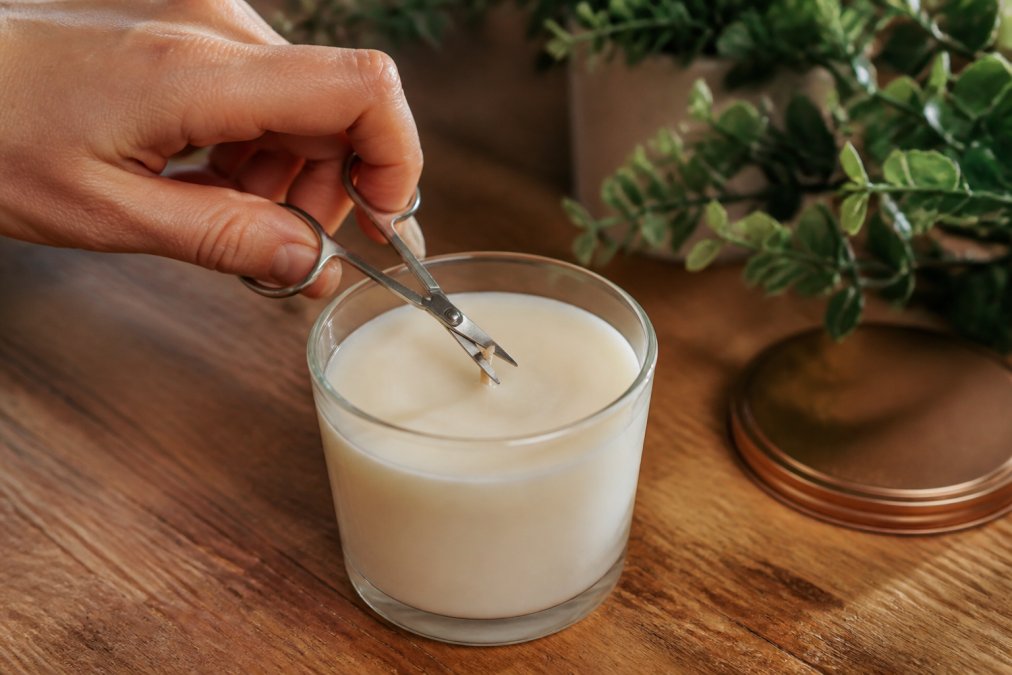
Wick size, material, and condition drive more of your air quality outcome than the wax base does, and it is the part that actually determines what you breathe.
The wick-wax-fragrance triad
A candle is a three-part combustion system, and the parts must be matched. The wick pulls fuel; the wax delivers fuel; the fragrance oil changes the fuel's behavior. Get the ratio wrong and you get soot, tunneling, or a weak flame, regardless of whether the wax is soy or paraffin.
Limoncello Scented Soy Candle →
Wick sizing: why "too small" and "too large" both fail
A cotton wick sized correctly for the jar diameter pulls wax up at the right rate and burns it fully. Too small a wick starves the flame, creating tunneling and a weak, smoky burn. Too large a wick overheats the wax and can push the flame into a soot-producing state.
Wick material and the lead question
Lead-core wicks were banned in the United States years ago, but that ban does not cover every imported candle on a discount shelf. Lead-free cotton wicks are the standard for reputable makers, and they are what My Madd Kreations uses in every pour. If a label does not state the wick material, treat that as a gap.
Fragrance oil interaction: the chemistry competitors skip
Fragrance oils fall into two broad categories. Synthetic fragrance oils use lab-created aroma molecules with consistent, predictable flash points, making them easier to formulate around. Essential oils use plant-derived volatile compounds that vary batch to batch and often have lower flash points, so they burn less predictably at high concentrations.
Phthalate-Free Candle Fragrances and Why They Matter More Than Wax
Fragrance oil is the sleeper variable in the soy wax vs paraffin health debate. A paraffin candle scented with a clean, phthalate-free fragrance can produce a better indoor air profile than a soy candle loaded with a cheap synthetic blend.

Benefits of Soy Wax Candles Beyond the Health Conversation
Soy wax is hydrogenated soybean oil, a renewable resource grown and processed domestically, the core of its appeal.
Allergy and Sensitivity Profiles: Who Reacts and Why
People with fragrance sensitivity react to specific aroma compounds, not to "soy" or "paraffin" as categories. That is the most useful thing to understand if you have asthma, allergies, or a reactive airway.
How to Read a Candle Label Before You Buy
Reading a candle label takes about thirty seconds once you know what to look for. The front of the jar is marketing. The back is where the useful information lives, if the maker bothered to include it.
- Wax type stated clearly: "100% soy wax" or "soy blend" tells you what you are buying. Vague terms like "natural wax" mean nothing specific.
- Wick material named: Look for "lead-free cotton wick" or "cotton wick." Silence on the wick is a red flag.
- Fragrance disclosure: "Phthalate-free" is the phrase to look for. "Premium fragrance oils" without the phthalate note is weaker.
- Burn time and weight: A stated burn time plus jar weight lets you compare value across candles.
- Maker transparency: A brand that names its wax, wick, and fragrance standards is a brand that expects you to check.
| What to Check | Why It Matters | Red Flag |
|---|---|---|
| Wax type | Determines burn behavior and origin | "Natural wax" with no specifics |
| Wick material | Drives soot and burn quality | No wick material listed |
| Fragrance disclosure | Phthalates and synthetics enter your air | "Fragrance" with no qualifier |
| Burn time | Real indicator of value per dollar | No burn time stated |
| Maker info | Traceability and accountability | No brand contact or origin |
Conclusion: Choosing a Candle You Can Actually Breathe Around
The soy wax vs paraffin wax health debate is real, but it is not the whole picture. Wax type sets the baseline. The wick and the fragrance oil decide the outcome.
Frequently Asked Questions
Are soy candles actually less toxic than paraffin?
Soy candles burn cooler and generally produce less soot than paraffin, which can mean fewer airborne particles in a closed room. That said, the wax is only part of the picture. The wick and the fragrance oil load often have a bigger effect on what you breathe than the wax base itself. A soy candle with a lead-core wick or heavy synthetic fragrance can still degrade indoor air quality, while a well-made paraffin candle with a cotton wick and clean fragrance may perform fine. Look at the whole candle, not just the wax.
Do paraffin candles release harmful chemicals when burned?
Burning any candle produces some combustion byproducts, including particulate matter and small amounts of volatile organic compounds. Paraffin is petroleum-based, and studies of candle emissions have detected compounds such as benzene and toluene in trace amounts during burning. The key word is trace. Ventilation, burn time, wick length, and fragrance concentration all influence how much ends up in your air. In a well-ventilated room, occasional paraffin burning is unlikely to be a major concern for most healthy adults.
What should I look for in a non-toxic candle?
Start with the wick: lead-free cotton is the standard you want. Next, check the fragrance. Phthalate-free candle fragrances and essential oil blends reduce exposure to questionable additives. Then look at the wax. Soy, coconut, and other plant-based waxes burn cooler and produce less soot, but the wax alone does not determine safety. A short ingredient list, a maker who answers questions about sourcing, and a clean burn with no black smoke are practical signs you are on the right track.
Why should you avoid paraffin wax in candles?
You do not have to avoid it entirely, but there are reasons to be cautious. Paraffin is a petrochemical byproduct with a higher melting point, so it burns hotter and can produce more soot and carbon deposits than soy. In poorly ventilated spaces, that soot contributes to indoor particulate matter. If you burn candles often, in a small room, or around people with asthma or sensitivities, a soy candle is the lower-exposure choice. For occasional use in a ventilated room, paraffin is not automatically dangerous.